
Is Dad Running to the Bathroom All Night? UroLift® Minimally Invasive BPH Procedure Without Cutting
Is Dad Running to the Bathroom All Night? UroLift® Minimally Invasive BPH Procedure Without Cutting
"The UroLift® System is a minimally invasive outpatient procedure used to treat Benign Prostatic Hyperplasia (BPH), or an enlarged prostate."
Important Note: Nocturia and Frequent Urination Are Not Always Managed by Medication Alone
UroLift® may be suitable for selected BPH patients. Suitability depends on prostate size, obstruction pattern, symptom severity, urinary flow, and ultrasound findings. Please consult Dr. Chao-An at Morning Urology Clinic for individualized evaluation.
Frequent urination, nocturia, weak urine flow, and difficulty urinating may have options beyond medication. Dr. Chao-An of Morning Urology Clinic explains that UroLift® is a minimally invasive outpatient procedure designed for BPH. It works like opening curtains: enlarged prostate tissue compressing the urethra is pulled outward and fixed in place to help restore urinary flow.
Getting Up Four or Five Times a Night, Passing Only a Small Amount
A common combination in clinic: four to five trips to the bathroom overnight, only a small volume each time, and daytime fatigue — with ultrasound and uroflowmetry showing an enlarged prostate compressing the urethra. The questions families most often ask on an older relative’s behalf are about bleeding and the effect on sexual function. Both should be explained individually before surgery, based on prostate volume, median lobe anatomy and general health.
Ultrasound and urinary flow evaluation showed that the enlarged prostate was compressing the urethra, causing frequent urination, nocturia, weak flow, and difficulty urinating.
Dr. Chao-An explained that UroLift® may be an option for patients concerned about traditional surgery. It uses tiny implants to pull obstructing tissue aside and open the urethral channel without removing tissue.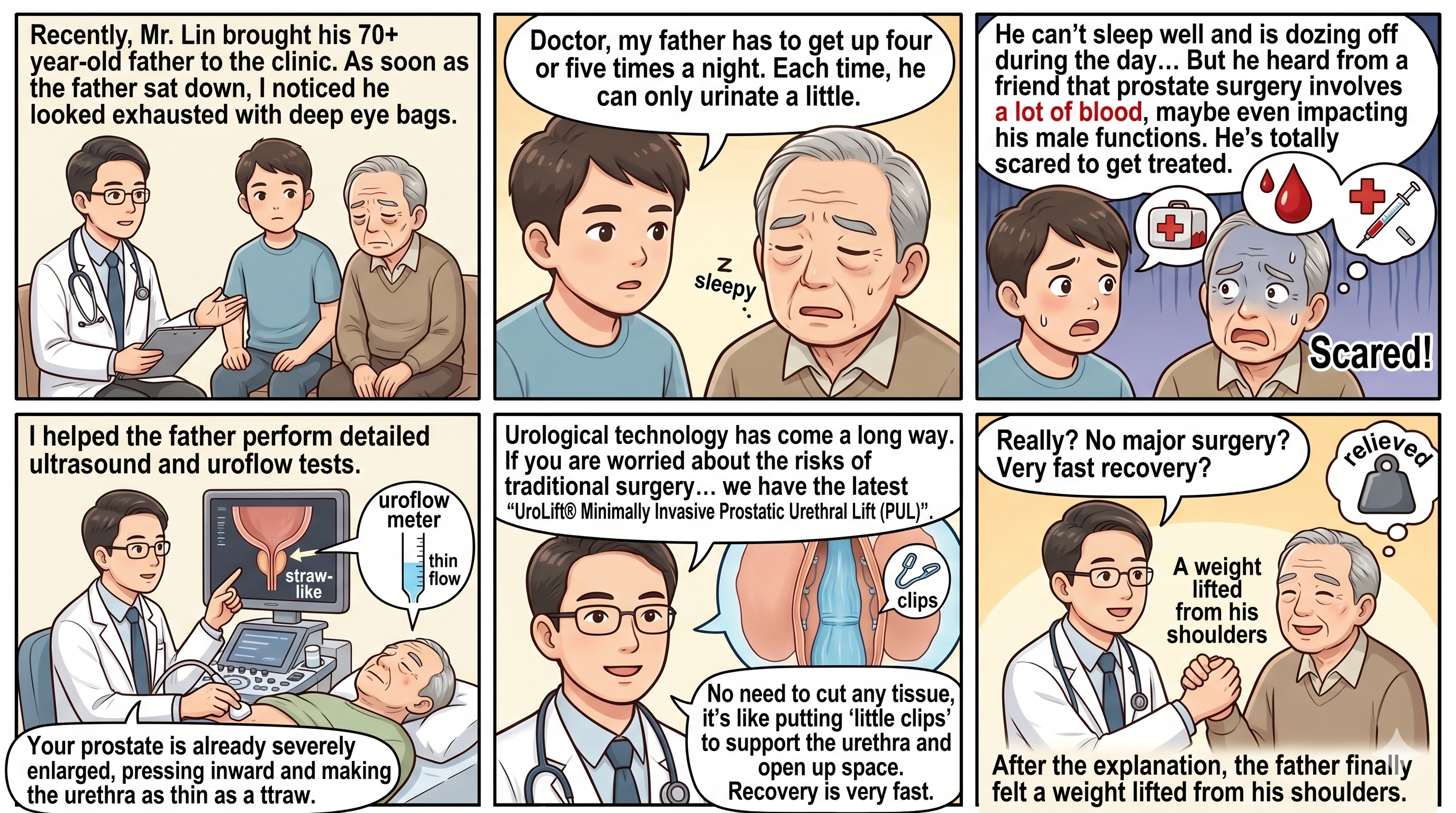
What Is Benign Prostatic Hyperplasia?
Benign Prostatic Hyperplasia (BPH) is common among middle-aged and older men. Enlarged prostate tissue may compress the prostatic urethra and cause lower urinary tract symptoms such as frequent urination, nocturia, weak stream, hesitancy, and incomplete emptying. UroLift® System, also known as Prostatic Urethral Lift (PUL), is a minimally invasive mechanical approach.
Why Medication May Not Be Enough: BPH Is a Structural Obstruction
BPH is like a water pipe squeezed from the outside. Medication may relax surrounding muscles, but it cannot fully remove the structural pressure.
UroLift® can be simplified as:
1. Tiny implants are placed ➔
2. Obstructing tissue is pulled open ➔
3. The urethral channel opens.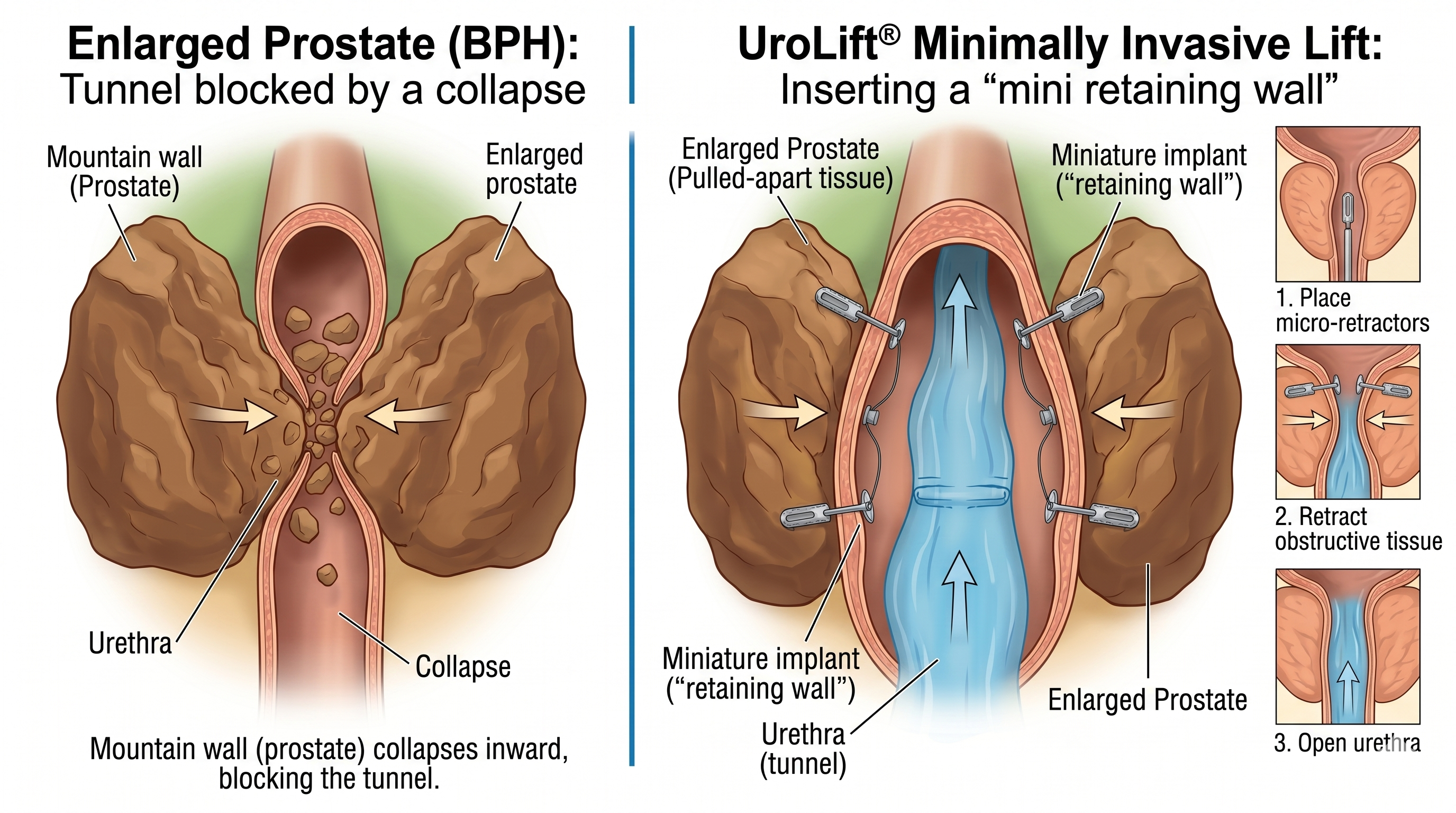
Preserving Tissue and Dignity
A key advantage of UroLift® is that it does not cut, remove, or heat prostate tissue. By avoiding broad tissue damage, it may help reduce concerns such as retrograde ejaculation and sexual function impact compared with some traditional procedures.
Who May Be Suitable?
UroLift® may be considered for men over 50, patients with prostate volume around 30–80 cc, those with poor medication response or medication side effects, and those for whom preserving ejaculatory function is a priority, or who want a shorter recovery.
Treatment Advantages
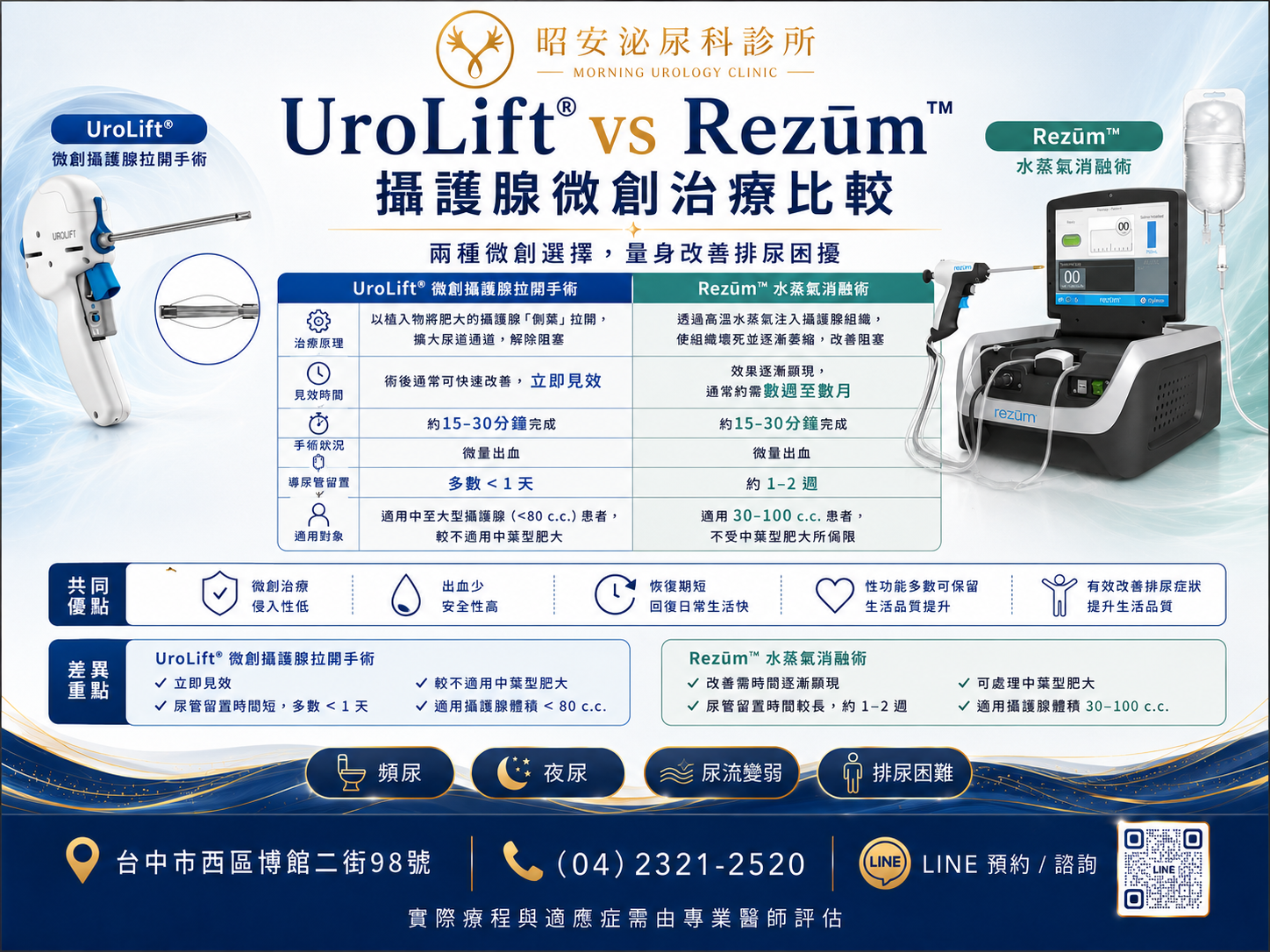
UroLift® vs. Rezūm™: How to Choose?
The choice depends on prostate size and anatomy. Rezūm™ may be considered when median lobe enlargement protrudes into the bladder. UroLift® is usually discussed first when a short recovery and preserving ejaculatory function are the main priorities.
Safety Layer
Although UroLift® is minimally invasive, the following points should be understood.
- Indication: medically confirmed BPH with significant urinary obstruction symptoms.
- When it is not suitable: based on the approved device information, this procedure is not used if you have a urinary tract infection now, if the shape of the urethra does not let the device pass safely (for example a narrowed urethra), if you are allergic to the implant metals (nickel and titanium), if the prostate is larger than the approved size range, if you leak urine because the muscle that closes the bladder does not work, or if you can clearly see blood in your urine now. A middle lobe that grows well into the bladder also gives limited benefit, so it is usually not chosen. Known or suspected prostate cancer, a nerve-related bladder problem, trouble passing urine that comes mainly from a weak bladder muscle rather than from blockage, and blood-thinning medicine that cannot be paused all need to be checked first. Your doctor confirms this with ultrasound and a urine flow test before the procedure.
- Possible side effects: mild hematuria, pelvic discomfort, or temporary urinary frequency may occur in the first few days and usually improve within 1 to 2 weeks.
- Treatment planning and suitability should be determined after advanced ultrasound and urinary flow evaluation at Morning Urology Clinic.
- Anesthesia: at Morning Urology Clinic this procedure is always done under sedation-type general anesthesia given through a vein (IVGA). An anesthesiologist checks your heart and lung condition before the procedure and monitors you during it. Anesthesia always carries some risk, so the medicines you take (including blood thinners) and any problem you have had with anesthesia before are reviewed first.
- The day of the procedure: no hospital stay is arranged, and most people go home the same day after a period of observation. The urinary catheter goes home with you and is removed when you come back to the clinic the next day. Please do not drive yourself on the day you have anesthesia; ask someone to come with you.
Key points to know before you decide
What is UroLift®?
UroLift® is a minimally invasive procedure for BPH that uses tiny implants to pull enlarged prostate tissue away from the urethra and improve urinary flow.
Does UroLift® remove prostate tissue?
No. UroLift® does not cut, scrape, or heat prostate tissue. It mechanically opens the obstructed urethral channel.
Is UroLift® suitable for all BPH patients?
Not always. Suitability depends on prostate size, median lobe anatomy, urinary flow, symptom severity, and personal priorities.
Which department should I visit for nocturia or frequent urination?
A urology clinic can evaluate urinary flow, ultrasound findings, residual urine, and prostate condition.
Whether this procedure suits you depends on the size and shape of the prostate. When the median lobe protrudes into the bladder, the improvement is usually less than with other techniques. Ultrasound and uroflowmetry come first, then the choice of minimally invasive method.